

According to statistics as of 2018 in a report from the United Nations Environment Programme, since 1950, nearly 9 billion tons of plastic have been produced globally, of which only 9% has been recycled, 12% has been incinerated, and the remaining 79% has been Landfill or flow into the natural environment.

Global plastic production is huge and growing year by year. According to the statistics of 2019, the global plastic production is close to 400 million tons. Among them, Asia accounts for 50%. China alone contributes about 25% of the global total output with an output of 95.741 million tons. The waste plastic generated in China reaches 63 million tons.
The above data shows that the output of plastics is very high, but the recycling rate is very low. The current advocacy is to reduce the use of unnecessary plastics and increase the recycling rate of post-consumer plastics.
The regulatory environment of the United Nations plastic restriction order
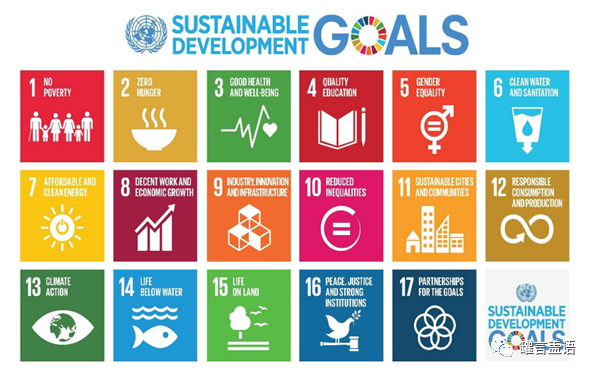
The first United Nations Environment Assembly held in 2014 emphasized that plastic waste pollution is one of the top ten environmental problems that need to be solved urgently in the world. Among the 17 sustainable development goals of the United Nations, 12-15 are closely related to the sustainable development of packaging to varying degrees.
In May 2019, the United Nations Environment Programme (UNEP) passed the Basel Convention on the Control of Transboundary Movements of Hazardous Wastes and Their Disposal, and decided to include plastic waste in import and export restrictions. Regional centres and civil society take control actions to address the challenges of marine plastic litter and microplastics, including regulatory action, financial and other incentives, expanded producer responsibility, public awareness and voluntary action.
The regulatory environment of the EU plastic restriction order
On January 16, 2018, the European Commission adopted a Europe-wide plastics strategy as part of the transition to a more circular economy. Focusing on growth and innovation, the strategy changes the way products are designed, produced, used and recycled in the EU. According to the plan, all plastic packaging on the EU market should be recyclable by 2030, reducing the consumption of single-use plastics and limiting the intentional use of microplastics.
On June 12, 2019, the European Commission issued the Directive (EU) 2019/904 “Single-use Plastics Directive” applicable to single-use plastic products. The plastic products that are gradually banned include: cutlery, plates, straws, cotton swabs, beverage stirrers utensils, balloon support rods, food containers made of polystyrene, and products made of oxidatively degradable plastics, etc. The EU restricts the sale of related products on the market, prompting a reduction in consumption, and at the same time regulates product requirements, labelling requirements, producer responsibility, and classified collection. The directive, which takes effect on July 1, 2019, aims to completely ban single-use plastics such as straws, cutlery and cotton swabs, oxidatively degradable plastics, expanded polystyrene food containers and cups from 2021. The EU will achieve the goal of “recycling 90% of plastic bottles by 2029 and containing at least 30% recycled content by 2030”.
On July 3, 2019, the European Commission released the DECISION (EU) 2019/1268 Citizenship Initiative “Let’s End the Age of Plastics in the EU”, which aims to ban the use of all single-use plastics in Europe and calls for a ban on all plastic packaging by 2027 and plastic bottles. The proposal came into effect on July 26, 2019.
On March 6, 2020, the European plastics pact was signed. Governments in 15 countries and 66 companies and organizations signed and launched the European Plastics Pact, pledging to achieve a number of specific goals by 2025, including: designing all packaging to be reusable or at least recyclable; Use a minimum of 20% reduction, increase the recycling rate by 25%, and increase the recycled content to 30%.
On March 11, 2020, the European Commission announced the adoption of a new circular economy action plan. The plan states that the European Commission will take steps to reduce microplastics in the environment, in addition to reducing plastic waste.
In July 2020, the European Council agreed to implement the coronavirus pandemic relief package from 1 January 2021, including a tax of €0.80 per kilogram of non-recyclable plastic packaging. The specific laws will be submitted to the European Parliament and the European Council for approval after they are perfected.
On August 6, 2020, the European Dairy Association (EDA) issued a review of the Packaging and Packaging Waste Directive. EDA supports reducing packaging waste and improving sustainable packaging. The EU dairy industry is working hard to find better solutions for collecting and recycling plastics.
The two major reasons behind the EU’s “plastic limit order” The relevant EU regulations have been promulgated intensively in the past three years for two reasons. On the one hand, it is indeed due to the increasingly serious problem of plastic pollution; on the other hand, it has a greater relationship with China’s ban on the import of garbage. China promulgated an implementation plan in 2017, and officially implemented a new “Solid Waste Law” on September 1, 2020, which completely prohibits the entry of “foreign garbage”, resulting in the inability to export plastic waste in developed countries such as Europe, the United States, and Japan. The processing capacity of plastic waste and the market for recycled materials have affected people’s lives.
The EU has always been at the forefront of sustainable-related regulations in the world, and each member state and brand companies have also actively responded to the policy call and formulated corresponding goals and implementation measures according to the direction of the laws and regulations. For plastic varieties that are used more frequently in consumption scenarios,
From the policy trends in the chart, the following information points can be summarized.
First, take a ban on single-use plastic small items that are difficult to collect and have mature alternatives, such as straws, dinner plates, etc., and will officially take effect in 2021.
Second, for categories that are widely used and cannot be completely banned, such as beverage bottles, caps and other packaging forms, methods such as classified recycling, reuse, and tax lever adjustment are adopted to promote the recycling process of plastic products.
Third, for plastic products with a relatively complete recycling chain, such as PET, the EU has also issued relevant policies and goals to promote the overall recycling rate, which is embodied in the following three aspects. First of all, from January 1, 2021, an additional tax of 0.8 euros/Kg will be imposed on the non-recycled parts of plastic products. Secondly, set a medium and long-term recycling target for PET plastic bottles, that is: the overall recycling rate in 2025 is not less than 77%, and the overall recycling rate in 2029 is not less than 90%. Finally, set a medium and long-term target for the use of recycled materials in PET bottles, that is: in 2025, the content of recycled PET (rPET) is not less than 25%; in 2030, the content of rPET is not less than 30%.
The Regulatory Environment of China’s Plastic Restriction Order
On January 9, 2020, the National Development and Reform Commission and the Ministry of Ecology and Environment jointly issued the “Opinions on Further Strengthening the Control of Plastic Pollution”, proposing phased tasks and goals for plastic pollution control. The “Opinions”, as an “upgraded version” of the “Notice of the General Office of the State Council on Restricting the Production and Sales of Plastic Shopping Bags” in 2008, has attracted great attention from relevant departments and enterprises since its release. The “Opinions” stipulate that by the end of 2020, my country will take the lead in prohibiting and restricting the production, sales and use of some plastic products in some regions and fields; by the end of 2022, the consumption of disposable plastic products will be significantly reduced, and alternative products will be promoted.
On July 17, 2020, the National Development and Reform Commission issued the “Notice on Solidly Promoting Plastic Pollution Control”. The main contents include strengthening the supervision and inspection of the prohibition of the production and sale of plastic products, that is, local market supervision departments should carry out quality supervision and inspection of plastic products, and investigate and deal with the production and sale of ultra-thin plastic shopping bags with a thickness of less than 0.025mm and plastic bags with a thickness of less than 0.01mm. Ethylene agricultural mulch film, etc.; strengthen the supervision and management of the ban on plastics in retail, catering and other fields; local commerce and other departments shall, in accordance with the requirements of the Law on the Prevention and Control of Environmental Pollution by Solid Waste, and in conjunction with the work arrangements of the local government, strengthen the supervision and management of commodity retail places and takeaway services , various exhibition activities, etc. to stop using the supervision and management of non-degradable plastic bags and other products.
As can be seen from Table 2, the plastic restriction order is mainly aimed at plastic bags used in supermarkets, disposable plastic tableware in the catering industry, disposable plastic products in hotels, and packaging in the express industry. There will be little impact on the prepackaged food industry until the end of 2025.
In addition, straws are also a category that has a greater impact, and their use in the catering industry will be officially banned from 2021. Categories such as pre-packaged food and beverages (such as Yili’s Tetra Pak packaged dairy products) are not included in the scope of control for the time being. However, the policy will change with the environment. As a brand user, we should pay attention to the change of the policy at any time, and be prepared to switch from the level of technology and supply chain.
With the introduction of “opinions” at the national level, local governments have also successively issued supporting management measures to implement and promote relevant requirements.
From June 2 to July 2, 2020, the National Development and Reform Commission conducted a public consultation on the “Implementation Measures for the Extended Responsibility System for Beverage Paper-based Composite Packaging Producers (Trial)”, and revised it according to the feedback and released it for implementation. As the most used type of packaging in our company, paper-based composite materials such as Tetra Pak and Combibloc have clarified the following contents in the “Draft”. First, the main body of clear responsibility is the manufacturer of packaging materials, and the filling (using) enterprise is the assisting party, and cooperates to realize the recycling and reuse of packaging materials. The second is to clearly put forward the quantitative responsibility target setting, that is, in 2025, the resource utilization rate will reach 40%, and the comprehensive recovery rate will reach 60%. According to Tetra Pak’s 2019 Social Responsibility Report, the current global comprehensive recycling rate of paper-based composites is only 26%, so there is a long way to go to achieve this goal.
The way to sustainable improvement of packaging materials
The path to sustainable improvement in packaging materials involves eliminating the use of non-recyclable materials, making packaging more recyclable, and applying life cycle assessment (LCA) to “digitize” the environmental impact assessment of packaging, which is detailed below in chapters.
Eliminate the use of non-recyclable materials
Polyvinyl chloride (PVC) material PVC uses a large amount of plasticizers in the processing process, which causes it to be easily decomposed during the mechanical recycling process to generate hydrogen chloride (HCl), which pollutes the recycling process. At the same time, the commonly used incineration treatment method is easy to produce dioxin Ying Er causes harm to the environment, so major brands have included PVC in the negative list of prohibited use. The national level has also recognized the harm caused by PVC in the process of plastic recycling, and has strengthened the management of PVC use specifications, such as: restricting the use of PVC. The use of plasticizers, limiting monomer residues, etc., guide companies to substitute materials when permitted.
Expanded polystyrene (EPS) EPS is difficult to effectively promote the growth of recycling rate due to its light weight and low recycling value. Therefore, major brands also use EPS as a restricted material and seek alternative solutions.
The use of carbon black and carbon black can easily cause other plastics to be colored in the subsequent recycling process. At the same time, due to the infrared absorption characteristics of carbon black, the NIR sorting system cannot identify the type of materials containing carbon black, resulting in misjudgment of sorting and affecting the follow-up. Recycling sorting. Therefore, brands are working hard to remove carbon black from packaging materials.
Composite packaging of dissimilar materials The composite packaging of dissimilar materials refers to a package that includes a combination of two or more materials in common materials such as paper, polyolefin, polyester, polyamide, and metal. Based on the current commercial recycling technology, such materials are difficult to recycle and reuse, and are generally incinerated or landfilled, which does not conform to the current concept of plastic recycling economy. The trend is to replace it with a single-material structure.
Make packaging easier to recycle
Coloring of packaging materials can reduce the recycling value of materials, so brands are trying to minimize or avoid adding color masterbatches in packaging, and Sprite’s packaging from green to transparent is a good example.
Small disposable plastic parts such as straws and bottle caps are not easy to collect and are easily scattered in the environment to cause pollution. Therefore, various countries are formulating regulations to prohibit the use of straws (the EU and China will take effect from 2021, but the scope of influence is currently limited to catering), requiring that the cap cannot be separated from the bottle body.

A comparison of the environmental impacts of paper (containing 30% recycled fiber), degradable plastic and polyethylene plastics with the same capacity and different materials found that, according to traditional understanding, paper should be the most environmentally friendly. , but after calculation, the overall energy consumption is smaller than the polyethylene material. Of course, this case has its own conditional assumptions and application background, which may not have universal significance, but at least it shows that we need to use more scientific methods to evaluate and guide the sustainable improvement of packaging.
The Enlightenment of “Plastic Restriction Order” to the Metal Packaging Industry
From another perspective, the plastic restriction order is essentially to minimize the impact of plastic packaging on the environment. There is no lack of inspiration for metal packaging, whether it is the ongoing reduction of cans/caps, the reclamation of waste cans, safer and more environmentally friendly manufacturing processes, packaging design for easy recycling, or the evaluation of the environmental impact of packaging based on LCA. behavior of the same subject.
Metal packaging has inherent advantages in recycling, and it is very easy to achieve a closed loop of can to can (CAN TO CAN). Recycling” trend. Therefore, how to use this advantage to influence the choice of brands and even consumers is worth thinking about by metal packaging practitioners.