

In the production cost of the iron printing workshop, the labor cost is not low, about 10% to 30%. If staffing is sparse or inefficient, labor costs will increase significantly, causing companies to pay employees more than expected product output, also known as under-productivity per capita. In addition, inefficiency can cause product quality to stagnate or even decline. Therefore, it is very important to improve the working efficiency of the iron printing workshop.
Five main reasons for the inefficiency of the staff in the iron printing workshop
There are five main reasons for the low work efficiency of workshop personnel.
The system is not perfect and the personnel are lazy. Enterprises have not formulated goals such as output and work efficiency and corresponding incentive mechanisms, and management mainly relies on “rule of man” rather than “rule of law”, which leads to the habit of people to develop lazy habits, and managers often need to be urged behind by managers.
The turnover rate of personnel is high, the new personnel are inexperienced, and the operation is not skilled enough. Since the reform and opening up, the flow of personnel in enterprises has increased significantly, and many enterprises will face the problem of brain drain. The biggest impact of personnel turnover on enterprises is that the lack of experience of new recruits leads to unstable product quality and low work efficiency. How to get newcomers to get started as soon as possible is a problem that troubles the management of many Indian iron companies.
The equipment is not advanced enough, and the lack of regular maintenance leads to frequent failures, and the failures will be shut down for maintenance regardless of the priority. Equipment is inefficient due to aging or no modification. At the same time, equipment is not regularly maintained, and sometimes equipment maintenance is neglected in order to catch up with production, resulting in frequent equipment failures. When dealing with failures, there is no prioritization, and even if there is a failure that does not directly affect the production quality or seriously affect the life of the equipment, it will be shut down for maintenance.
The process is too complicated or the scheduling is unreasonable, which leads to frequent change of models, which is full of problems. Manuscripts of different processes are lined up together, resulting in frequent equipment changes. The staff did not prepare the work in advance before changing the manuscript, resulting in a huge waste of time. Improper arrangement of process and color sequence can cause printing quality problems.
Defects in raw materials cause production problems. After cutting, the bending degree of the iron sheet exceeds the range or the iron sheet is deformed, folded, the appearance of the wave iron is poor and other quality defects, which cause the iron sheet to be jammed during the conveying process.
Method 1: Set reasonable goals and motivate employees to achieve them
The so-called no rules can not make a circle, the management of the printing workshop depends on the system. In addition, goals such as output and work efficiency and corresponding incentive mechanisms should be formulated, and efficiency and performance bonuses should be linked, so that employees can spontaneously strive for their goals.

Figure 1 In addition to the system, goals such as output and work efficiency and corresponding incentive mechanisms should also be formulated.
The formulation of goals should pay attention to methods. It should not be too difficult for employees to achieve without effort, and it should not be too difficult to make employees feel unattainable. Otherwise, the goal will lose its meaning.
After setting the goals, if the employees do not work hard, they will find that the goals cannot be achieved until the end of the month. If they do not receive bonuses, they will lose enthusiasm, and even people will become unstable, which will lead to serious personnel turnover in the enterprise; but if the bonus is paid, it will make the system become empty words. This involves the decomposition of goals by lower-level managers or employees.
In terms of decomposing goals, we might as well learn the wisdom of Yamada Honichi, a little-known Japanese runner who won the 1984 Tokyo International Marathon Invitational Tournament: “Look at the route carefully before the race, and draw the more striking signs along the way, such as The first sign is a bank; the second sign is a big tree; the third sign is a red house…, and so on until the end of the race. After the race begins, rush to the first at the speed of a 100-meter sprint After reaching the first goal, it rushed to the second goal at the same speed… The more than 40 kilometers of the race was easily finished because it was broken down into several small goals. If the goal is set at the finish line more than 40 kilometers away On that flag, people will be exhausted when they run more than ten kilometers, and they will be intimidated by the long distance ahead.”
The story tells us that breaking down goals can increase urgency and motivation.
Method 2: Improve the quality of personnel and let new personnel improve their operational proficiency
The following measures can be taken to solve the problems that are deeply troubled by the management of the enterprise, such as high turnover of personnel, serious personnel loss, and low work efficiency caused by the inability of new recruits to get started quickly.
Production of job instructions Make corresponding instructions for each position and equipment operation, not only with written materials, but also with pictures and even videos. Let employees operate according to the instructions when they are on the job, and read and compare the data when they are not on duty (off-duty hours or overtime). In this way, the combination of theory and practice, personnel will master the skills of equipment operation in the fastest time.
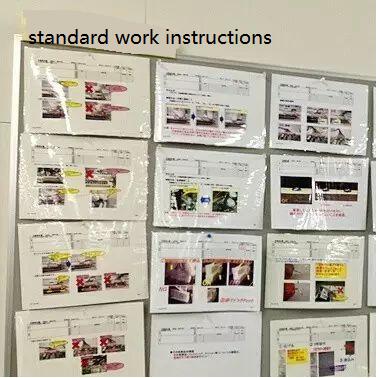
Figure 2 Corresponding instructions should be prepared for the operation of each post and equipment for personnel reference.
Record adjustment data for manuscripts with high production frequency Record some adjustment data for frequently produced manuscripts and paste them near the equipment, such as the scale of the school bus, the amount of ink, the amount of varnish added, etc., so that when personnel adjust or replace the process manuscripts can be completed as quickly as possible.
Method 3: Equipment renovation and maintenance should be carried out at the same time, and faults should be dealt with according to the priority
Equipment Retrofit To retrofit some outdated and aging equipment, or purchase advanced equipment to improve the inefficiency of the equipment, for example, CTP plate making can be used to replace the traditional PS plate to reduce the pause time caused by printing color registration, plate revision, etc.

Figure 3 CTP plate making can be used to replace the traditional PS plate to reduce the pause time caused by printing color registration, plate revision, etc.
Regular maintenance of equipment This is very important. Don’t ignore equipment maintenance in order to catch up with production. If the equipment is not well maintained, the loss caused by shutdown due to failure during production is often much higher than the cost of early shutdown maintenance.
Prioritize faults If the equipment failure does not directly affect the production quality or seriously affect the life of the equipment, it can be recorded first and dealt with when the production line does not catch up with orders or is shut down on weekends. . For serious faults or faults that must be solved immediately, you need to find out the cause, and then turn it on after adjustment.
Method 4: Improve the process to improve efficiency
Optimizing Order Arrangement Negotiate with the business personnel to arrange the same process as much as possible when arranging orders, thereby reducing the time for replacing rubber rollers, inks and coatings. For example, manuscripts of the same specification from different customers can be arranged together for production. However, it should be noted here that all the iron sheets on the production line must be cleaned up after the same manuscript is produced, so as to avoid the mixing of the iron sheets of the same specification from different customers (the printing pattern or the amount of coating may be different), which may cause customers to mix up. Complaints and claims.
Preparing for manuscript change in advance Unless the manuscript is temporarily changed or the order is inserted, the production line should be predictable when the manuscript is changed or the specification is changed. Therefore, some preparations can be made before changing manuscripts and specifications. For example, within half an hour before replacing the next manuscript, mix the paint and ink well, prepare offset plates and rubber rollers in advance, and even prepare the machine scale and other data that may need to be adjusted for the next manuscript. Manuscript and specification replacements are completed within time, minimizing wasted time.
Changing the process and color sequence Generally speaking, the process is specified by the customer or formulated after business and quality control reviews. Since customers and business are not necessarily familiar with the process of iron printing, and the quality control is not necessarily familiar with the equipment on site, the troubles caused by the process or color sequence to production will be ignored when arranging the process and color sequence. Sometimes blue or green may not matter to the quality of the product on the first run, but because of the printing dots, maybe changing the color sequence, the problem will be much less, thus improving the production efficiency.
When the production is not smooth, reduce the production rate When the production is not smooth, if the production rate is increased, it is tantamount to drinking poison to quench thirst, not only the efficiency cannot be improved, but it will cause a series of problems such as high loss and unstable quality. At this time, the production speed should be appropriately reduced, or the production should be restarted after the problem is solved.
Method 5: Ask the supplier to improve the defects of raw materials
When the bending degree of the iron sheet after cutting is out of range or the iron sheet has deformation, bending angle, poor appearance of the corrugated iron and other raw material defects, it is necessary to actively report to the supplier.
Epilogue
In the current situation of overcapacity in the iron printing industry and even the entire metal packaging industry, low product prices, and gradually narrowing profit margins, the improvement of personnel work efficiency can undoubtedly improve the profit margin of the company. I hope this article can be helpful to friends in the industry.